


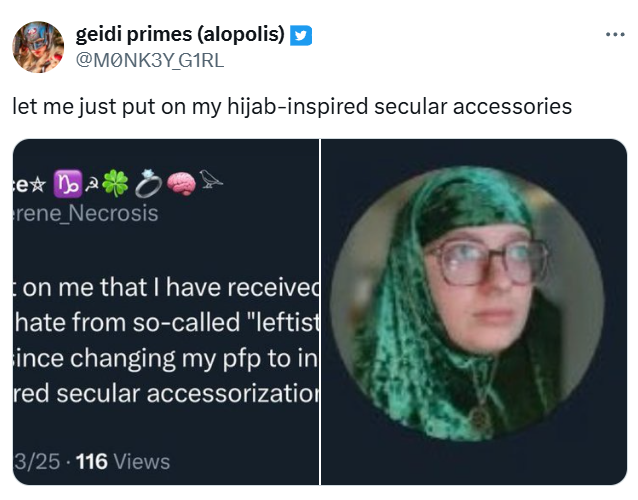
On Aug 23, 2025, an unusual phrase began spreading rapidly across X after a person tweeted that they had received hate from “so-called ‘leftist’ accounts” after updating their profile picture wearing what they described as a “hijab-inspired secular accessorization.”
“It’s not lost on me that I have received a huge amount of hate from so-called ‘leftist’ accounts since changing my fpf to include a hijab-inspired secular accessorization,” wrote @Serene_Necrosis on X.
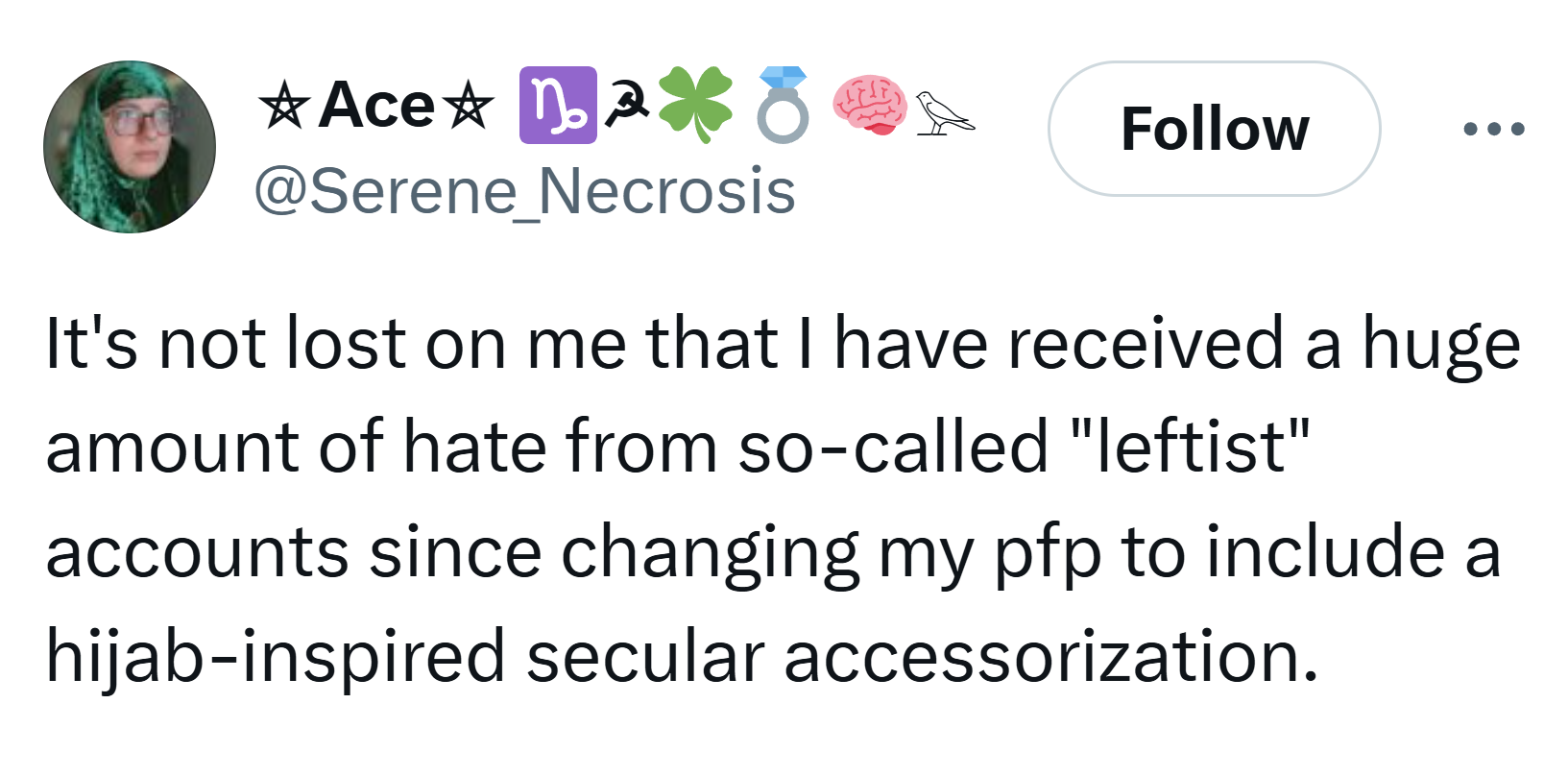
The oddly formal, buzzword-laden phrasing quickly became meme material, with users posting parody tweets and riffs on the phrase. Many found it to be a jumble of buzzwords that sounded both self-serious and unintentionally absurd, in part because “accessorization” was used incorrectly as a noun.
Where the phrase “hijab-inspired secular accessorization” came from
The original poster, @Serene_Necrosis, identifies as pagan and has repeatedly referred to their chosen head covering as a “Pagan wimple.” In follow-up replies and tweets, they defended head coverings as culturally diverse, stylish—and far from oppressive.
For instance, they argued that “Too many ‘leftists’ believe every US Regime imperialist lie about Iran,” pointing out what they saw as myths around the hijab. According to them, misconceptions include ideas such as: every Muslim wears a hijab, only Muslims may cover their hair, or head coverings always symbolize oppression.
They also claimed that accessories like scarves or veils could be beautiful, comfortable, and empowering. To back this up, they shared examples of hair covering traditions across several world cultures.
The history of head coverings
Although the internet latched onto the awkward phrase itself, the use of head coverings spans thousands of years. People across numerous religions and societies have worn them for spiritual, social, and cultural reasons.
According to headcovers.com, records from the 13th-century BC Assyria described noblewomen using head coverings to signal higher status. In early Christianity, women were instructed to veil themselves as a sign of spiritual submission. Jewish communities have long used garments such as the kippah, and many Muslim women wear varying forms of hijab, from simple scarves to full burqas.
While the meme took shape in the language of one pagan X user, its background touched on a genuinely broad and ancient tradition.
The hijab-inspired secular accessorization meme takes off
Despite the historical context, folks on the internet mostly leaned into the comedy of the phrase.
People began posting deliberately over-the-top tweets like: “Oh this old thing? It’s just one of my hijab-inspired secular accessorizations.”
Another joked, “for sale: hijab-inspired secular accessorization, never worn.”
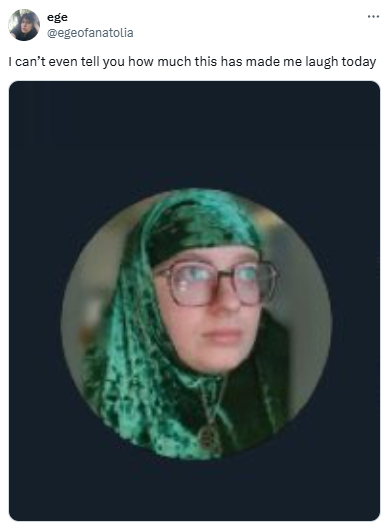
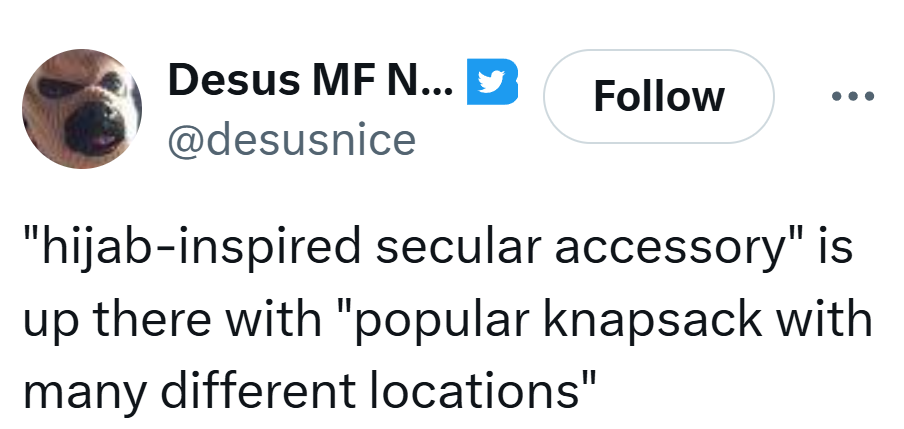
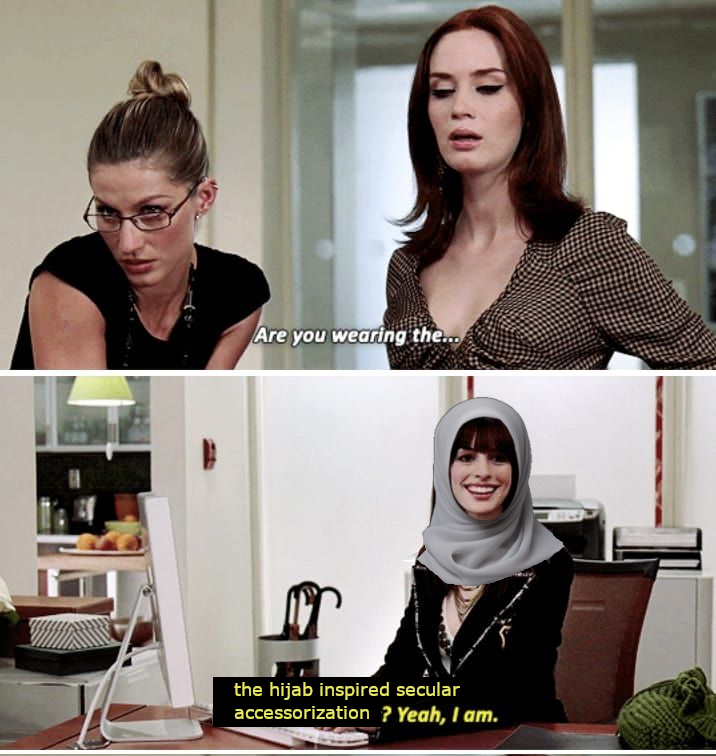
The phrasing gave meme-makers plenty of material because it combined serious-sounding political undertones with clunky, unnecessary descriptors. Additionally, the combination of religious language and fashion jargon created a surreal contrast that lent itself to copy-paste humor.
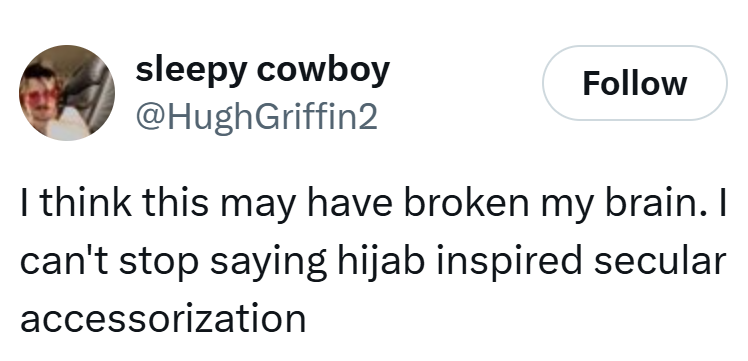
At the same time, reactions weren’t uniformly playful. Some Muslim users admitted they laughed at the phrase, but others criticized it as tone-deaf or appropriative.
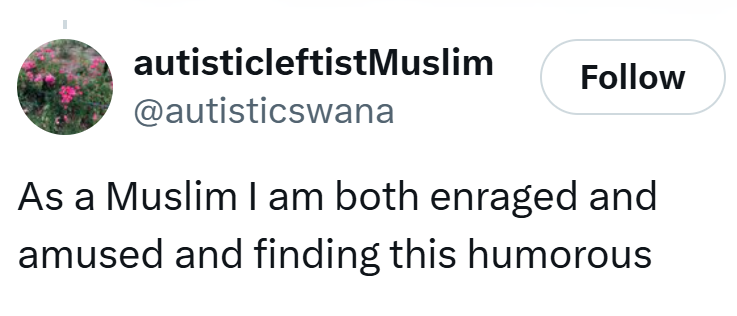
Several pointed out that white pagans rebranding the hijab as “secular accessorization” ignored the real struggles Muslim women face under both Islamophobia and state regulation.
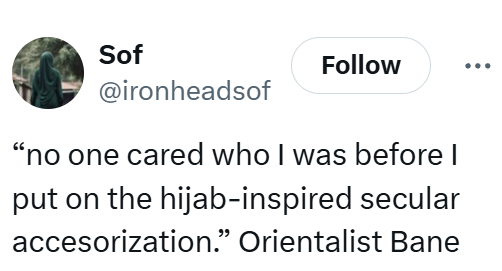
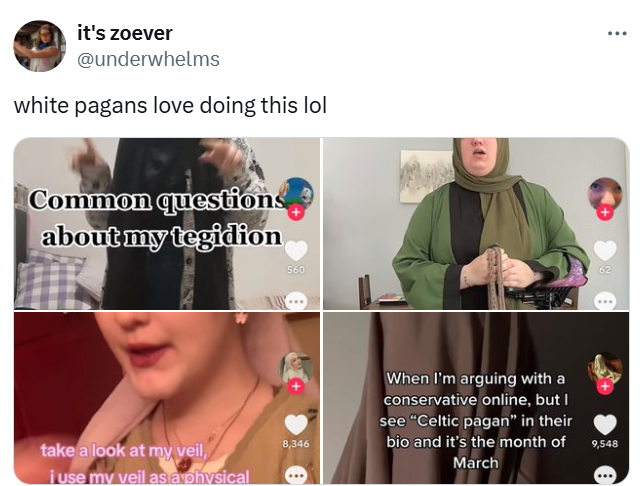
As one X user noted, “people act like twitter no longer has the juice but I saw these 2 tweets first thing this morning and I think we’ve still got it.”
The internet is chaotic—but we’ll break it down for you in one daily email. Sign up for the Daily Dot’s newsletter here.


