


Chronically online readers got into a heated debate this week over whether it’s normal to view yourself as the protagonist of every book you read.
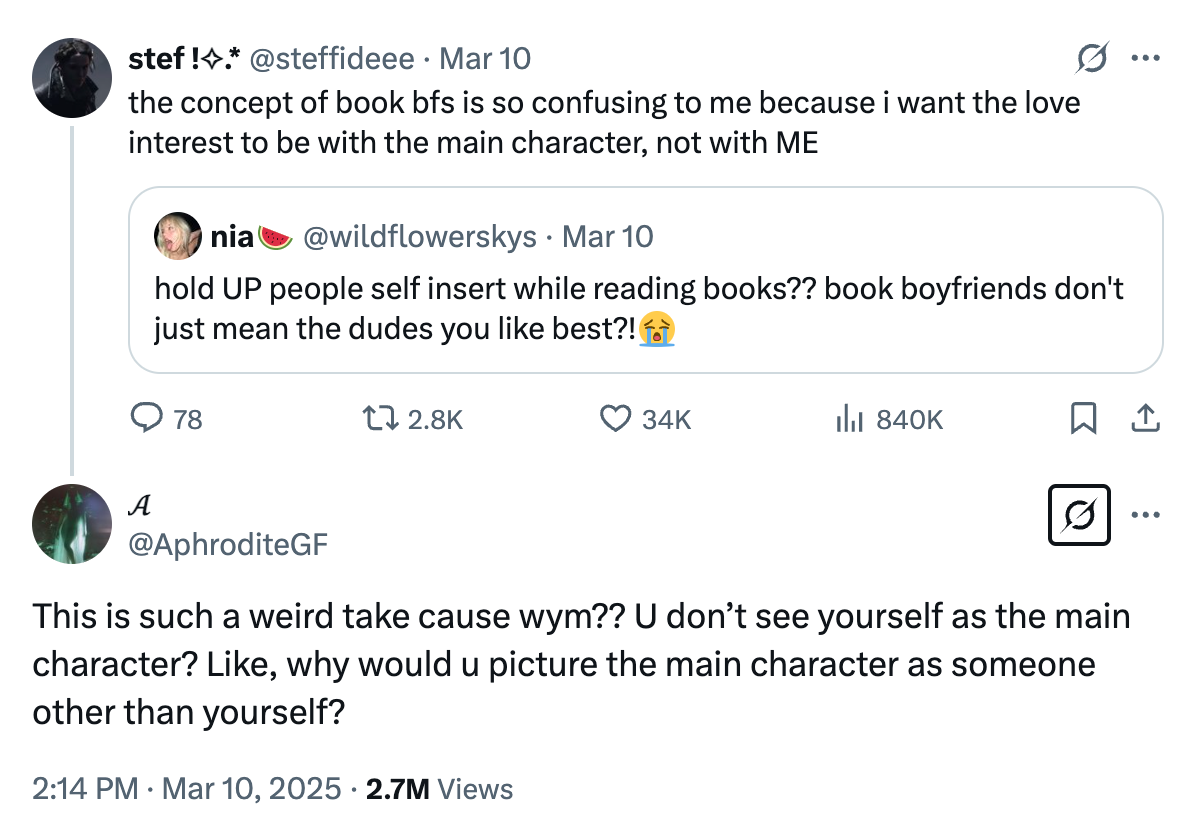
The conversation kicked off on Monday when @wildflowerskys tweeted, “Hold UP people self insert while reading books?? book boyfriends don’t just mean the dudes you like best?!”

What is a ‘book boyfriend?’
For those unfamiliar with the term, a “book boyfriend” is essentially a fictional male character from a book—often in the romance genre—who the reader develops a crush on.
Having crushes on fictional characters isn’t a new phenomenon. But as romance novels have been trending more and more towards being told from a first-person perspective (or dual first-person perspective, alternating between the two main characters), the framing of those crushes has sometimes shifted. Specifically, there’s also been a rising trend on BookTok in which some readers are essentially imagining themselves as the female protagonist.
That in and of itself isn’t new either. In fan fiction, the genre is referred to as “self-insert” stories, where protagonists are intentionally written largely as a blank slate so that readers can pretend the story is about them.
But the key word to remember here is “intentionally.” And so the discourse begins.
Do most readers ‘self-insert’ into stories?
As the conversation surrounding @wildflowerskys’ tweet grew, a bewildered reader chimed in with a response that left a lot of people cringing at the state of literacy.
“This is such a weird take cause wym??? U don’t see yourself as the main character?” @AphroditeGF wrote. “Like, why would u picture the main character as someone other than yourself?”
This method of reading isn’t necessarily wrong, exactly. Books are designed to stimulate the imagination, and it’s not anyone’s job to put constraints on how individual readers experience the stories with which they’re engaging.
But most fiction ultimately does aim to create distinct, defined characters—not empty vessels for the reader to project onto. So for anyone to assume that self-insertion is the norm and that reading about characters’ adventures as if they are, in fact, happening to people outside of yourself is somehow “weird” is a wild take.
Main character self-insert discourse
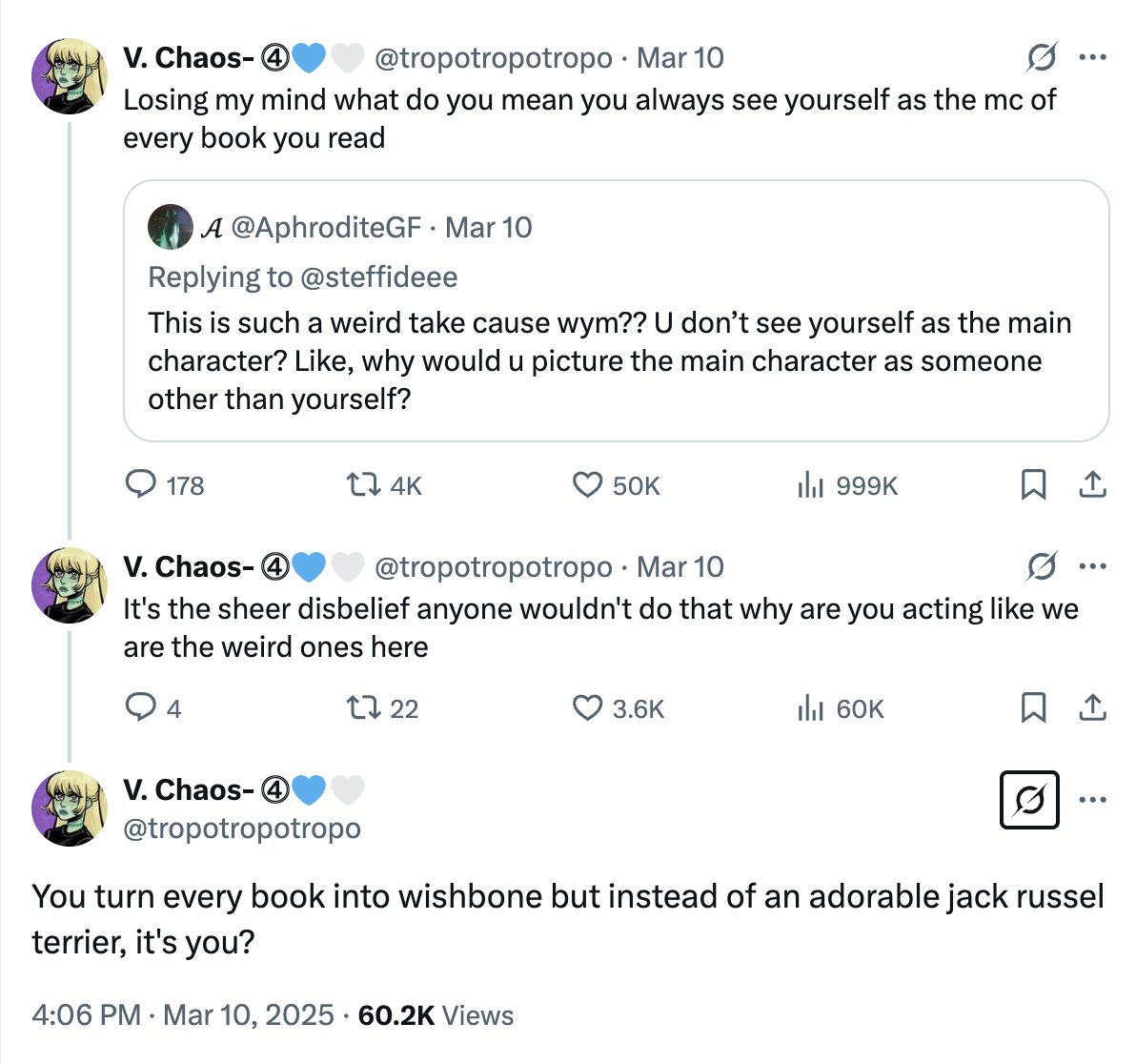
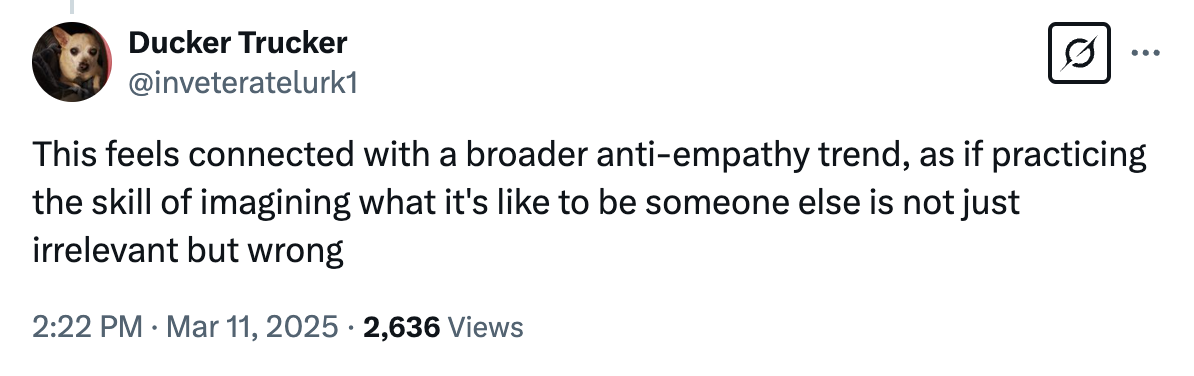
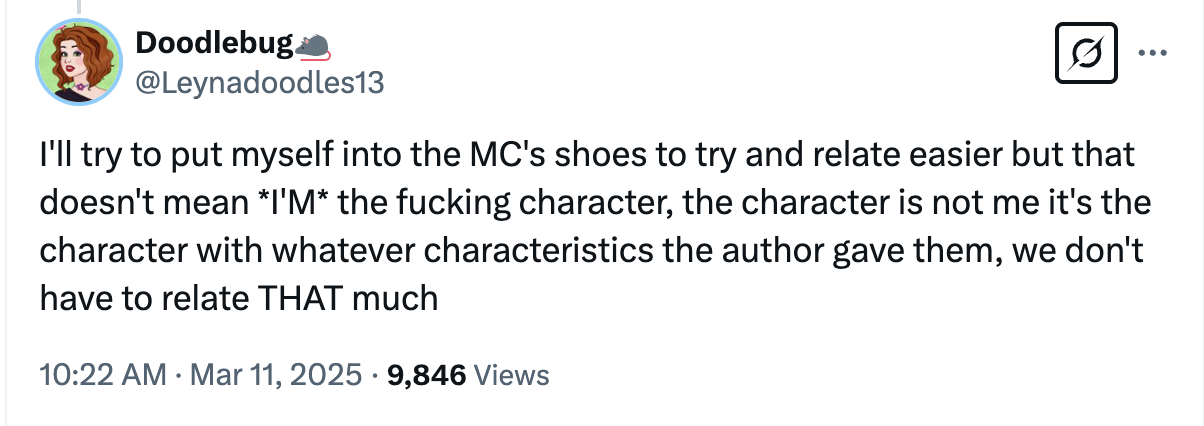
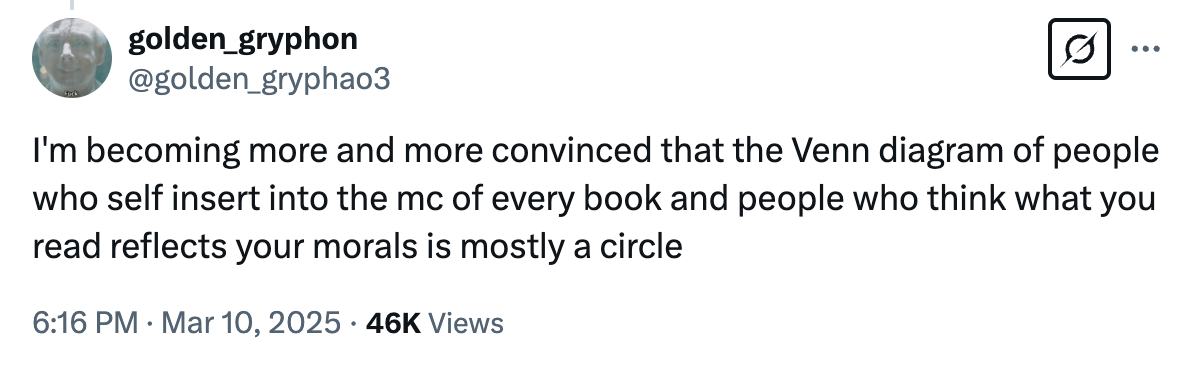
The “every main character is me” perspective clearly strikes a nerve with a lot of avid readers, particularly within the context of assuming that’s how stories are meant to be read. As a result, the pushback was swift and also dove into broader concerns surrounding reading trends, empathy, and even racism.
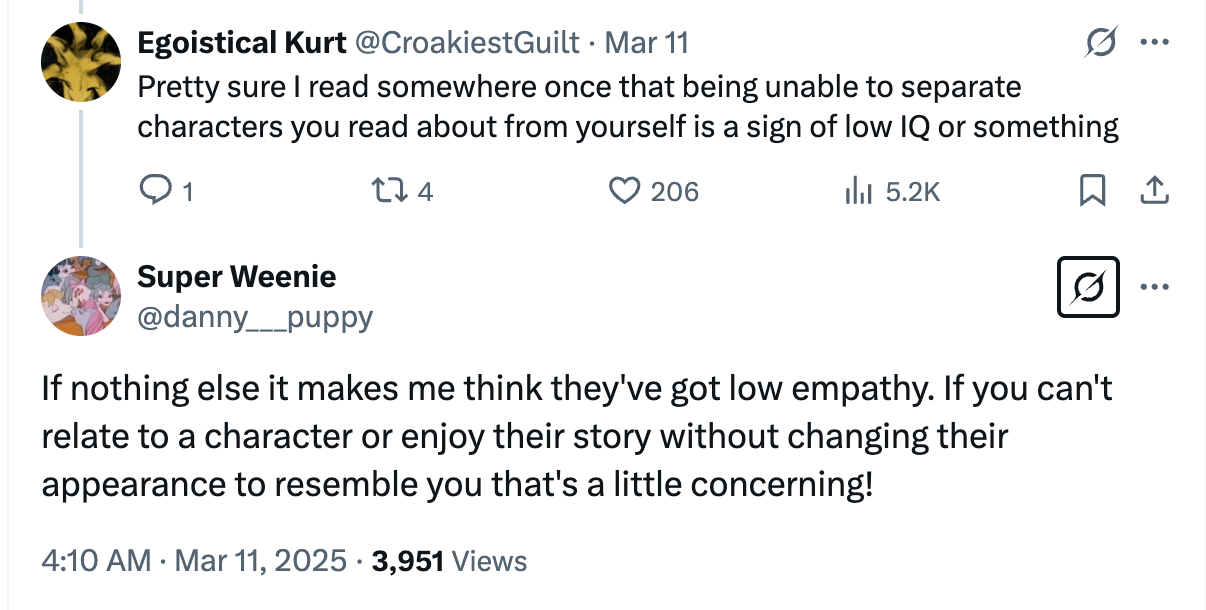
if you self insert in books this much I’m afraid you need help https://t.co/LEESQICPwz
— Andy 🍉 (@andysbookshelf) March 10, 2025

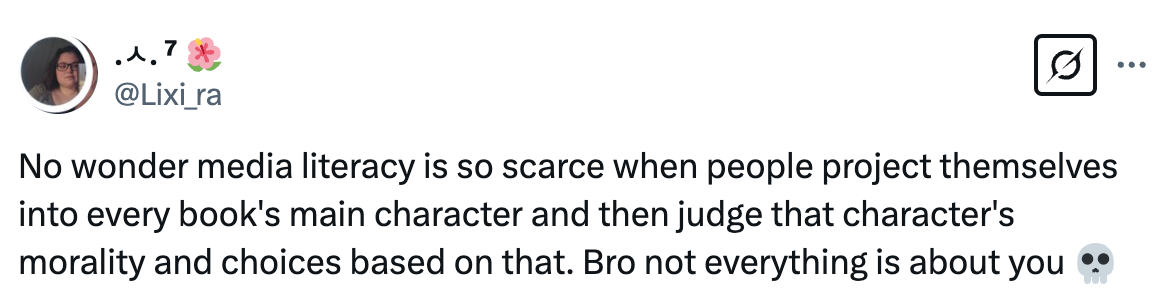
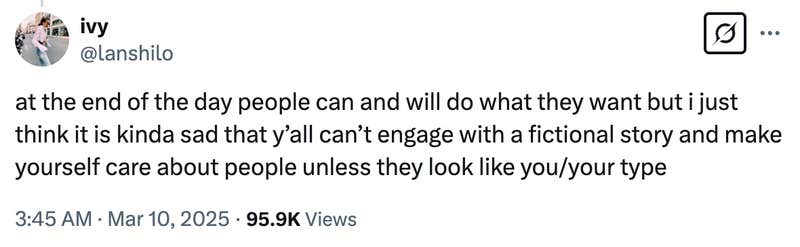
This is taking me out because women of color readers have had little issue relating to female protagonists explicitly described as white for decades. https://t.co/gM53tAoMSL
— Xiao Tong 🦋 CTC (@Velinxi) March 11, 2025
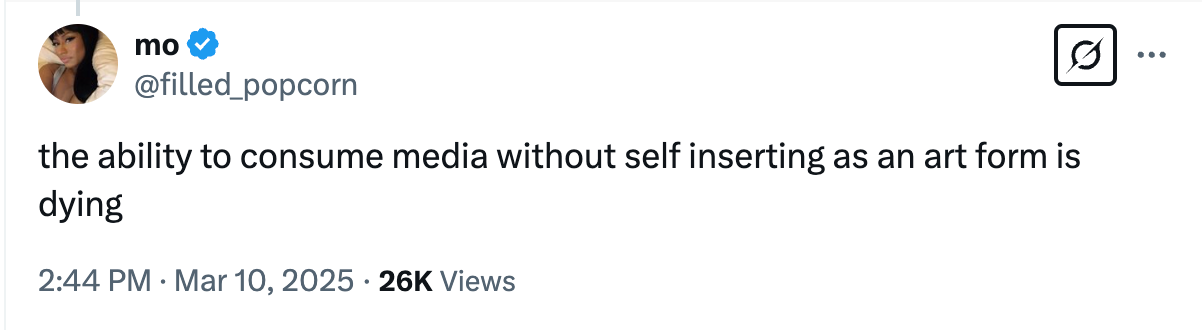
Reading fiction has long been considered a wonderful way to explore perspectives and experiences outside of our own. Although research into the connection between reading and empathy hasn’t gone on for too long, those studies frequently come to the same conclusion: reading shifts people’s attitudes towards others in a positive direction, particularly regarding marginalized groups.
Will that hold true if someone only reads books that allow them to imagine themselves in place of the protagonist? Well, why would it? And what broader repercussions might this have on media interpretation and literacy?
The internet is chaotic—but we’ll break it down for you in one daily email. Sign up for the Daily Dot’s web_crawlr newsletter here to get the best (and worst) of the internet straight into your inbox.


