


Internet users recently noticed that the top Google Image Search result for “Vincent Van Gogh” is an AI-generated approximation of his real face. This didn’t sit well with many artists or art appreciators, considering how one of Van Gogh’s most famous paintings is a self-portrait in his iconic Post-Impressionist style. Those who fear AI’s potential impacts on society and culture also have plenty to say.
The word “disrespect” came up a lot, as did complaints about Google’s increasing reliance on AI and what this might do to future generations. Studies have found that Google results have a measurable impact on people’s biases as they accept the first thing they see without question.
Van Gogh’s AI-generated portrait is now what most people see first—what are the cultural implications?
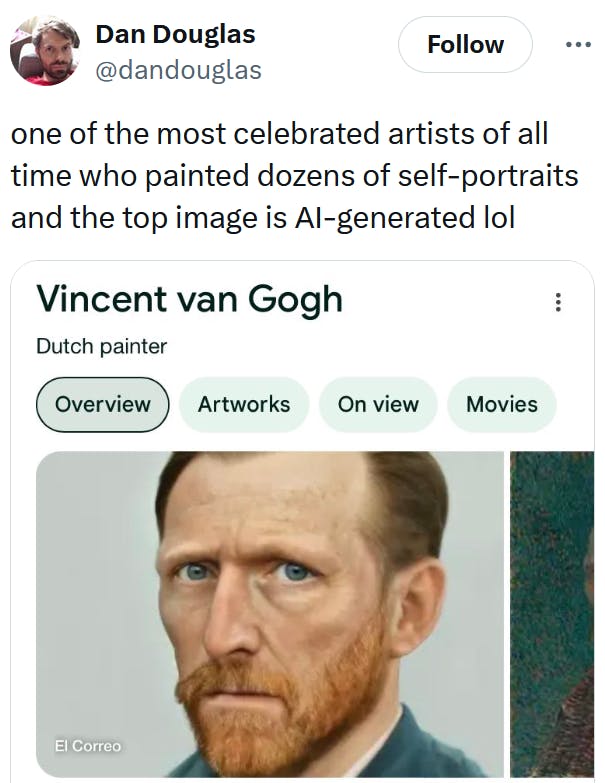
On March 20, 2025, X user @dandouglas posted a screenshot of his Google search results for “Vincent Van Gogh.” It shows the left-most image as a realistic AI-generated rendering of his self-portraits designed to estimate what he looked like in real life. This comes from an article in the Spanish magazine El Correo titled “The Painter and the Night: A new look at Van Gogh, the genius who carried a bonfire inside.”
Our own Google search turned up the same results. The AI-generated Van Gogh appears in the top spot, with the second and third dedicated to two of his actual self-portraits.
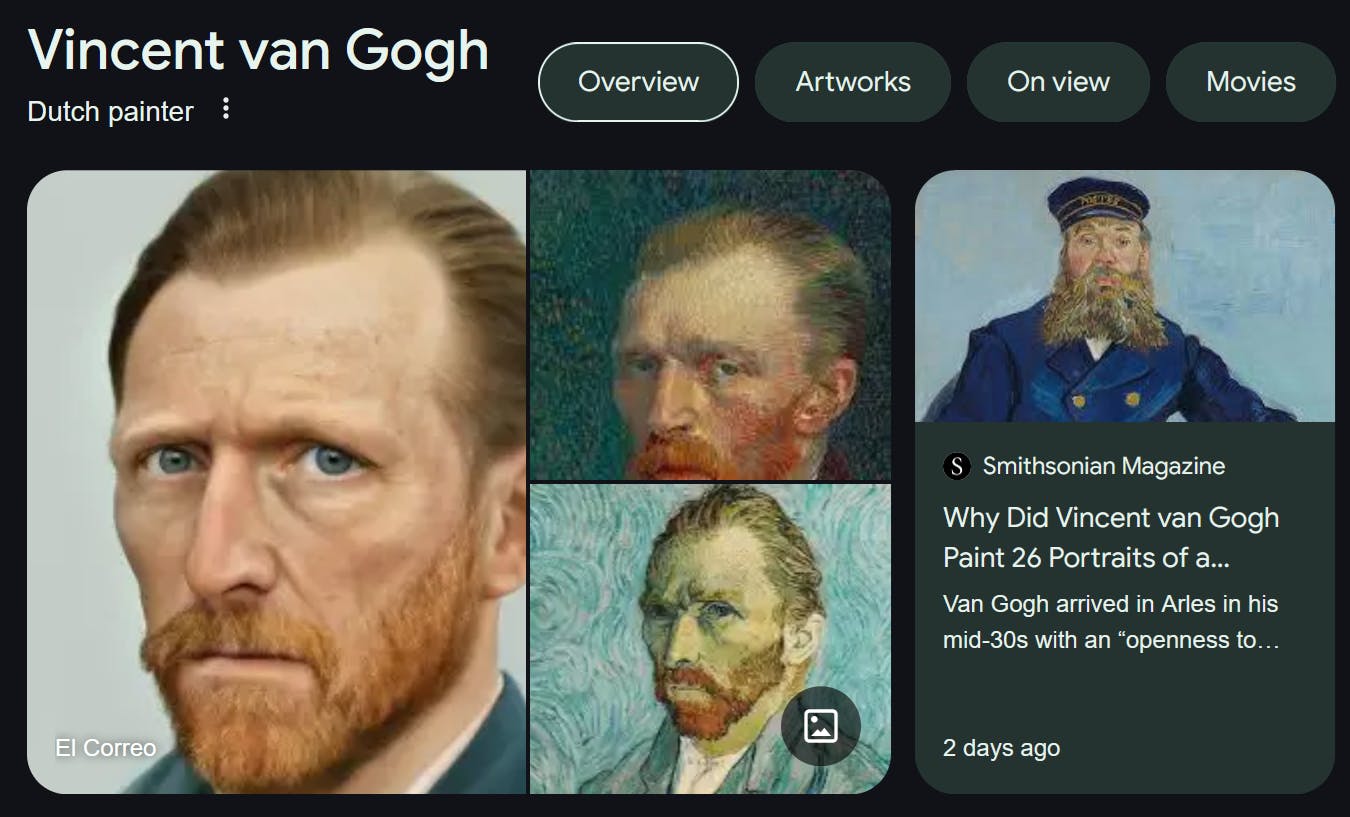
One can’t help but wonder if the genius with the inner bonfire would approve of his art being appropriated and altered by software designed to produce artwork without requiring the work of learning how to make art.
Van Gogh famously struggled with his mental health, turning to painting to cope with and express his loneliness and depression. He created around 2,100 paintings during his short life, most of them in just two years. In the years after his death, he became the portrait of the tortured, obsessive artist and a symbol of the need to create.
As younger generations rely on search engines more to find answers, will they come to believe that this AI-generated image of Van Gogh is his real face, unaware that photography wasn’t a widely available tech until after he died? Will AI remixes of his painting replace the real ones?
Search engines already influence what we believe. AI makes that more dangerous
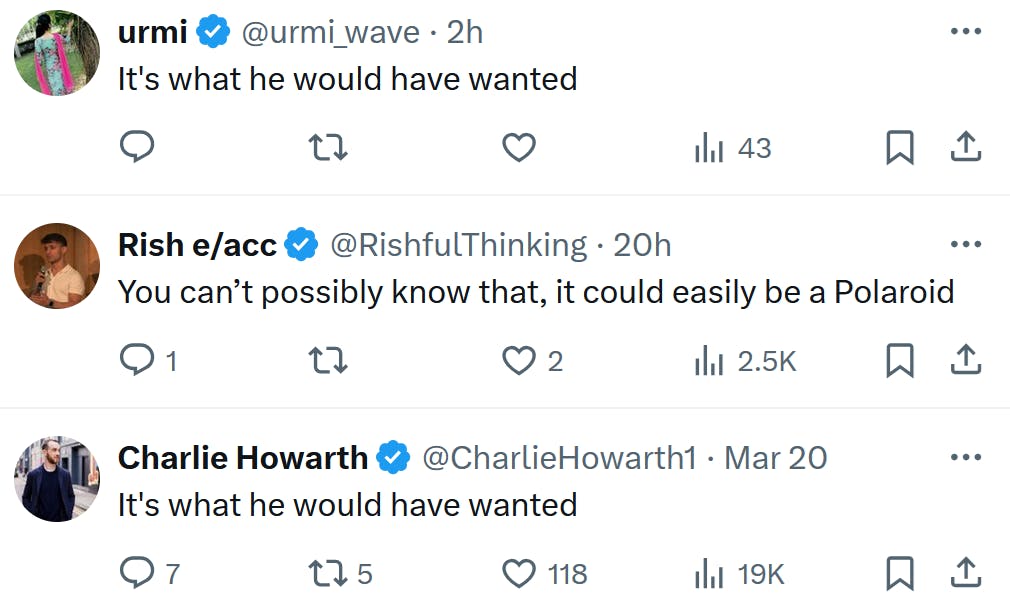
Comments on the X post revealing the Google results for Van Gogh skew strongly negative, with complaints about what AI is doing to art and how Google may be reshaping our culture by prioritizing it. Some users revealed that the search engine’s reliance on AI led them to switch to a different one.
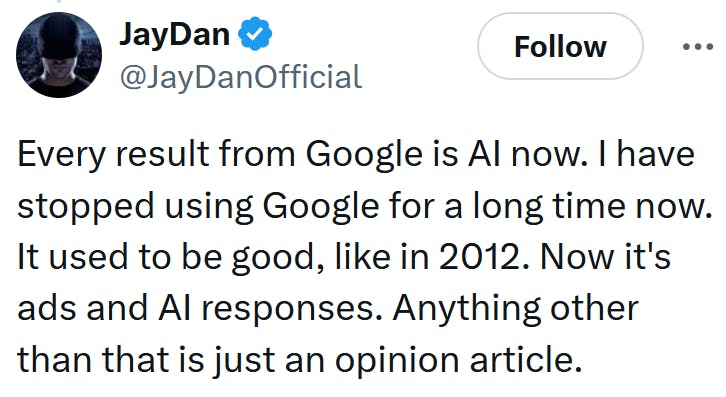
“Every result from Google is AI now,” wrote @JayDanOfficial. “I have stopped using Google for a long time now. It used to be good, like in 2012. Now it’s ads and AI responses. Anything other than that is just an opinion article.”
Many others used the word “bleak” to describe this trend and complained about how much Van Gogh would hate this, calling the very existence of AI images using his artwork disrespectful. It’s more than a little ironic that some of these accounts are likely bots judging by how they’re leaving identical comments.
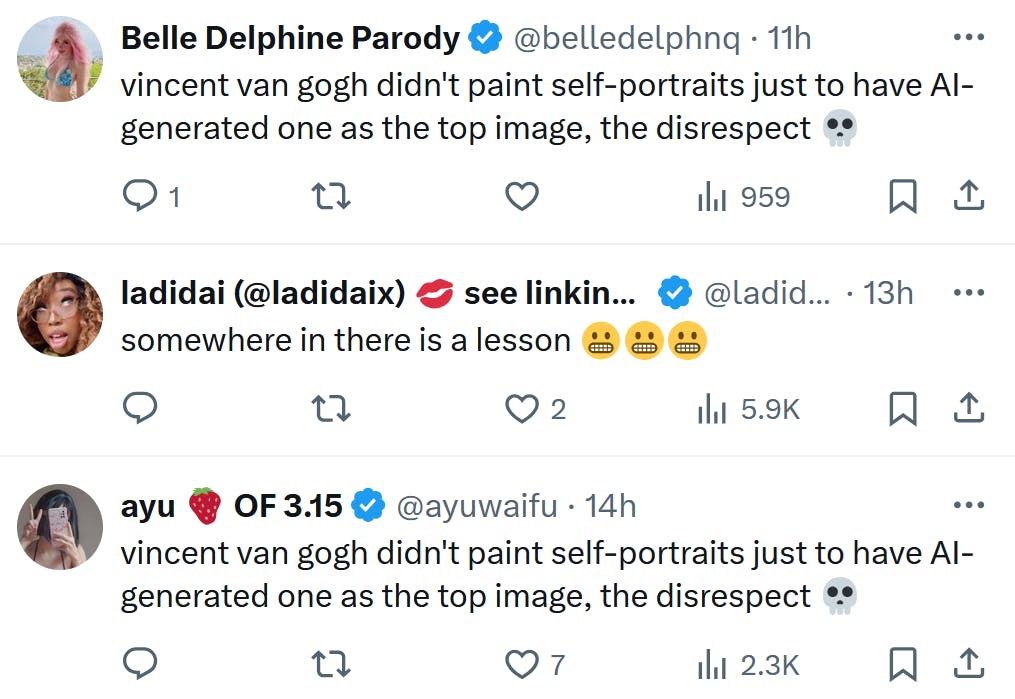
Users @belledelphnq and @ayuwaifu, who have hundreds of thousands of followers each, both remarked that “vincent van gogh didn’t paint self-portraits just to have AI-generated one as the top image, the disrespect.”
The impact of Google results on culture
Researchers have been studying how Google influences human behavior, attitudes, and knowledge for quite a few years now. Long before the rise of generative AI, people worried about how the habit of clicking only the top results to find answers without considering bias or checking a second source might mislead users or even change the political landscape.
“Web search engines act as gatekeepers when people search for information online,” said study authors in a paper published on June 5, 2017. “Research has shown that search engine users seem to trust the search engines’ ranking uncritically and mostly select top-ranked results.”
Their research confirmed this, finding that the only other factor influencing a user’s selection of search results other than ranking was the reputation of the sources.
Image search results alone may be intensifying racial prejudices by prioritizing stereotyped and often negative portrayals of minority groups. In April 2022, researchers searched for terms like “expats, immigrants, and refugees” in both English and German on popular search engines, and what they found may help explain where we are today.
“Our findings indicate that search engines reproduce ethnic and gender biases common for mainstream media representations of different subgroups of migrant population,” they wrote. “For instance, migrant representations tend to be highly racialized, and female migrants as well as migrants at work tend to be underrepresented in the results.”
The internet is chaotic—but we’ll break it down for you in one daily email. Sign up for the Daily Dot’s web_crawlr newsletter here to get the best (and worst) of the internet straight into your inbox.


