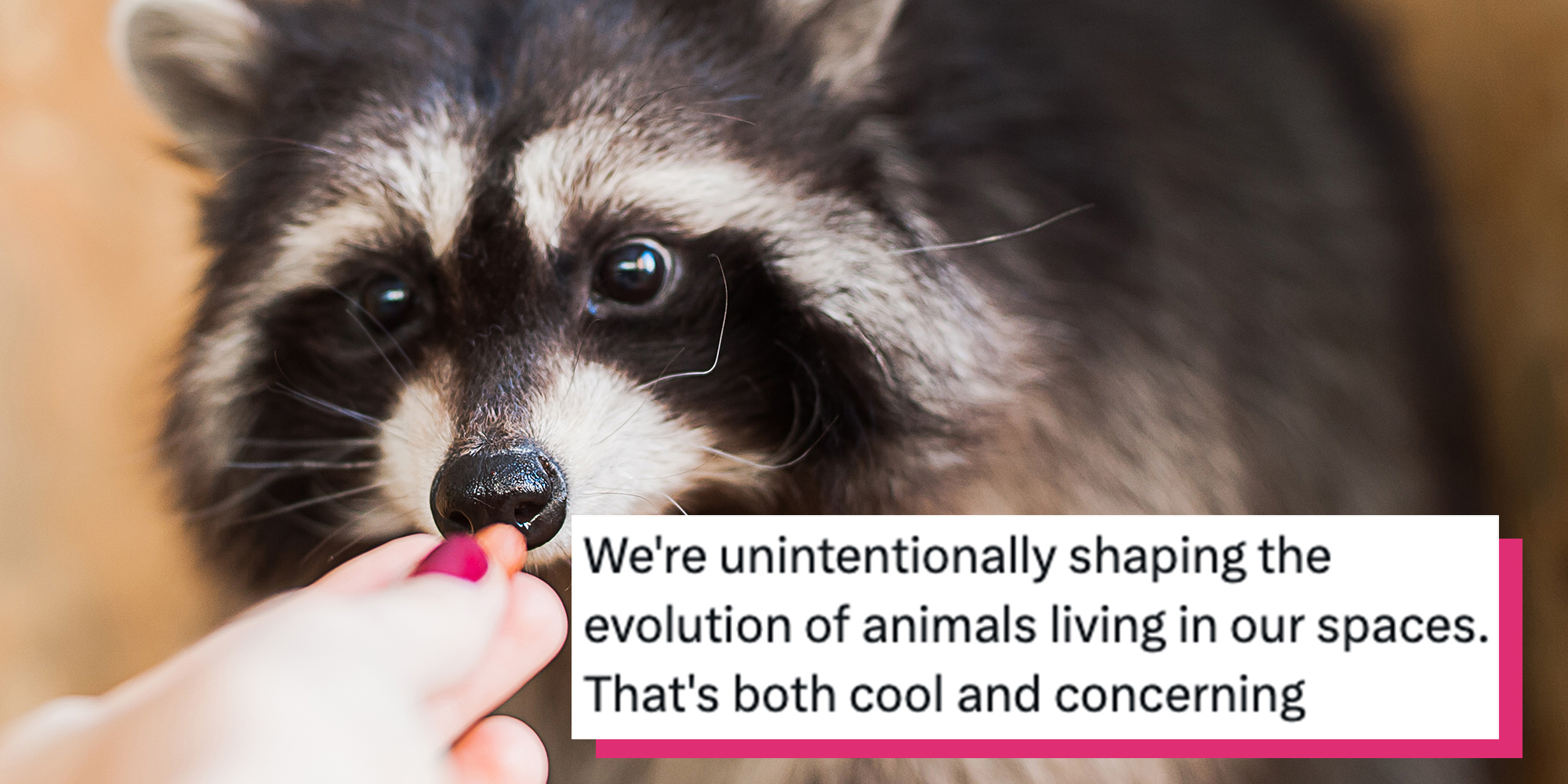
A new study has raccoon lovers wondering whether the internet’s favorite trash pandas are inching closer to domestication.
Biologists at the University of Arkansas at Little Rock analyzed images of urban and rural raccoons and found that city-dwelling raccoons have noticeably shorter snouts, a classic marker of early domestication seen in species like dogs and foxes.
Whether or not they could ever make good pets remains to be seen.
Are pet raccoons in our future?
According to the study, published in October, urban raccoons are showing a "clear reduction in snout length" compared to their rural counterparts. The critters who live closer to human populations had 3.56 percent shorter snoots overall.
Shorter noses indicate that raccoons are adapting to human interaction because that's exactly what happened with dogs. As our canine friends became domesticated, their wolf snouts shrunk and their faces grew rounder, making them look more juvenile and less threatening.
People are simply more likely to feed and adopt cuter animals. Scientists have observed the same phenomenon with foxes in the U.K. In addition to the nasal changes, TikTok science news reader @bearbaitofficial reported that raccoons' legs are getting shorter and more variations in fur color are appearing.
Human trash leads to animal companions
While raccoons have retained a bad reputation due to their affinity for getting in the trash, it's the trash itself that seems to lead to wild animals warming up to us, the trash makers.
"One thing about us humans is that, wherever we go, we produce a lot of trash," study researcher Raffaela Lesch told Scientific American. "If you have an animal that lives close to humans, you have to be well-behaved enough."
“That selection pressure is quite intense.”
Dogs happened because human garbage attracted and increasingly fed wolves across the world. Trash also increased the mouse population, which drew cats closer to human areas. It's no surprise that as we encroach further into raccoon territory, the same thing is happening again.
"I love raccoons but they are absolutely feral"
Domestication doesn't necessarily mean the animal in question will ever make the ideal pet. While no one could be blamed for fantasizing about having a raccoon roommate, @bearbaitofficial explained why they might be a more challenging pet than a dog or cat.
"They have the devil's mischief in them," she said. "Have you seen those paws? They can open cabinets. They can open doors!"
Over on r/TikTokCringe, some Redditors warned against the idea of pet raccoons after watching another TikToker and biologist pan the study, calling it "fundamentally flawed."
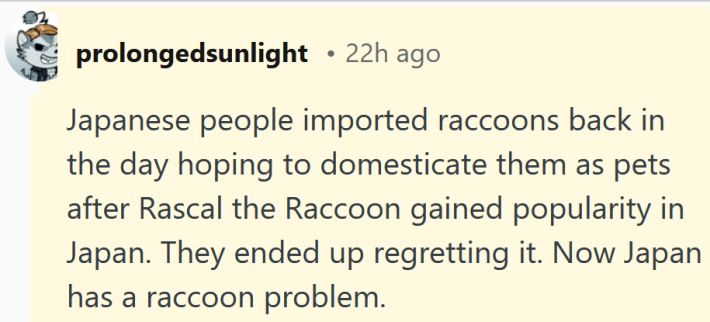
"Japanese people imported raccoons back in the day hoping to domesticate them as pets after Rascal the Raccoon gained popularity in Japan," wrote u/prolongedsunlight. "They ended up regretting it. Now Japan has a raccoon problem."
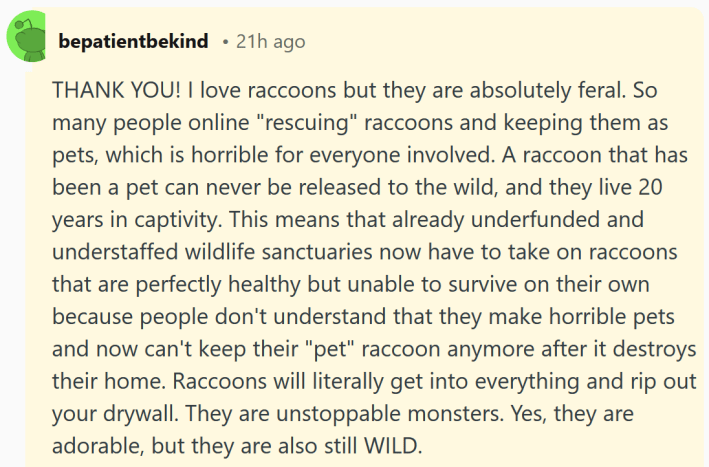
"I love raccoons but they are absolutely feral," claimed u/bepatientbekind. "So many people online 'rescuing' raccoons and keeping them as pets, which is horrible for everyone involved. A raccoon that has been a pet can never be released to the wild, and they live 20 years in captivity."
Even if these Redditors are correct, facts rarely stop humans from trying to be friends with the fuzzy creatures.
"I hear a pet raccoon in my future," said TikToker @thegoodmcleach.
The internet is chaotic—but we’ll break it down for you in one daily email. Sign up for the Daily Dot’s newsletter here.