Mattel’s launch of its first autistic Barbie this week has been met with both celebration and criticism from the autism community. Created in partnership with the Autistic Self Advocacy Network (ASAN), the doll features accessories and design choices meant to reflect common autistic experiences, from stimming to alternative communication tools.
Not everyone feels that it's the best representation, though many are happy to see any kind of autistic doll.
Mattel introduces autism Barbie
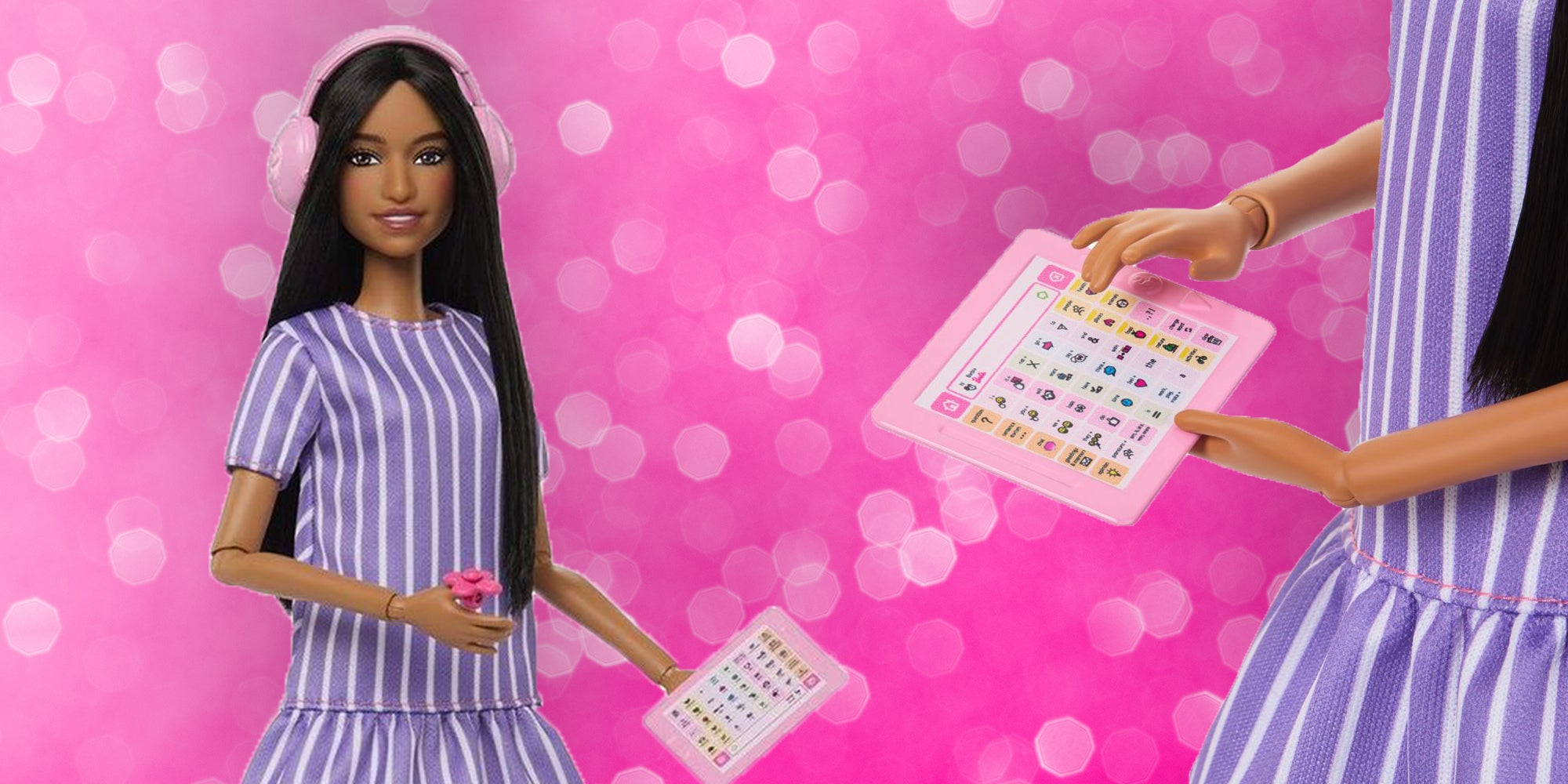
Mattel announced the new doll on Sunday, releasing images of the autistic Barbie and her accessories. This is the company's first doll ever made to represent the autism community.
She arrived with the help of ASAN, a "non-profit disability rights organization run by and for autistic people."
"As proud members of the autistic community, our ASAN team was thrilled to help create the first-ever autistic Barbie doll," said ASAN Executive Director Colin Killick for Mattel's press release. "It is so important for young autistic people to see authentic, joyful representations of themselves, and that’s exactly what this doll is."
"Partnering with Barbie allowed us to share insights and guidance throughout the design process to ensure the doll fully represents and celebrates the autistic community, including the tools that help us be independent."
The Barbie's key features and accessories include:
- Bendable wrists and elbows for hand flapping and other common stimming behaviors.
- Eyes shifted right to avoid direct eye contact.
- A loose dress with flowing skirt to limit fabric-to-skin contact.
- Flat shoes for easy movement.
- A pink fidget spinner.
- Pink noise-canceling headphones.
- A tablet featuring symbol-based Augmentative and Alternative Communication apps (AAC).
She is also notably not white, countering the false assumption that people of color are rarely autistic.
"I fear it's going to reinforce stereotypes"
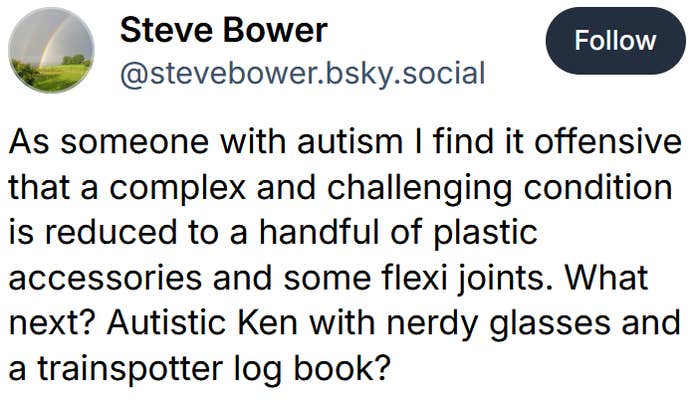
Toys meant to represent marginalized communities rarely please everyone, and autistic folks are definitely airing their concerns about this one. Some feel that it leans too hard into stereotypes by representing the most common signs of autism, or even that the inclusion of a tablet for communication help is infantilizing.
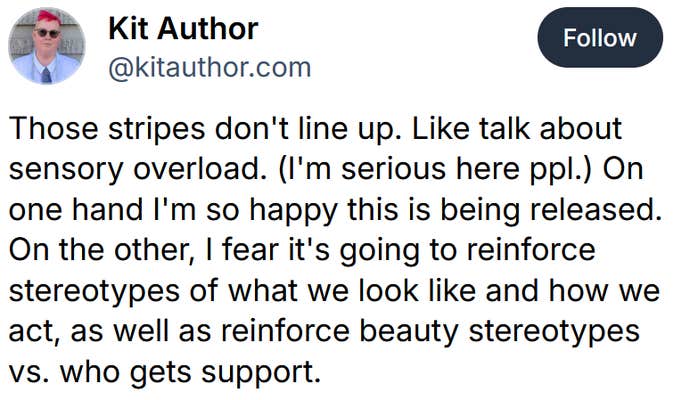
"Those stripes don't line up. Like talk about sensory overload. (I'm serious here ppl.)," wrote @kitauthor.com on Bluesky. "On one hand I'm so happy this is being released. On the other, I fear it's going to reinforce stereotypes of what we look like and how we act, as well as reinforce beauty stereotypes vs. who gets support."