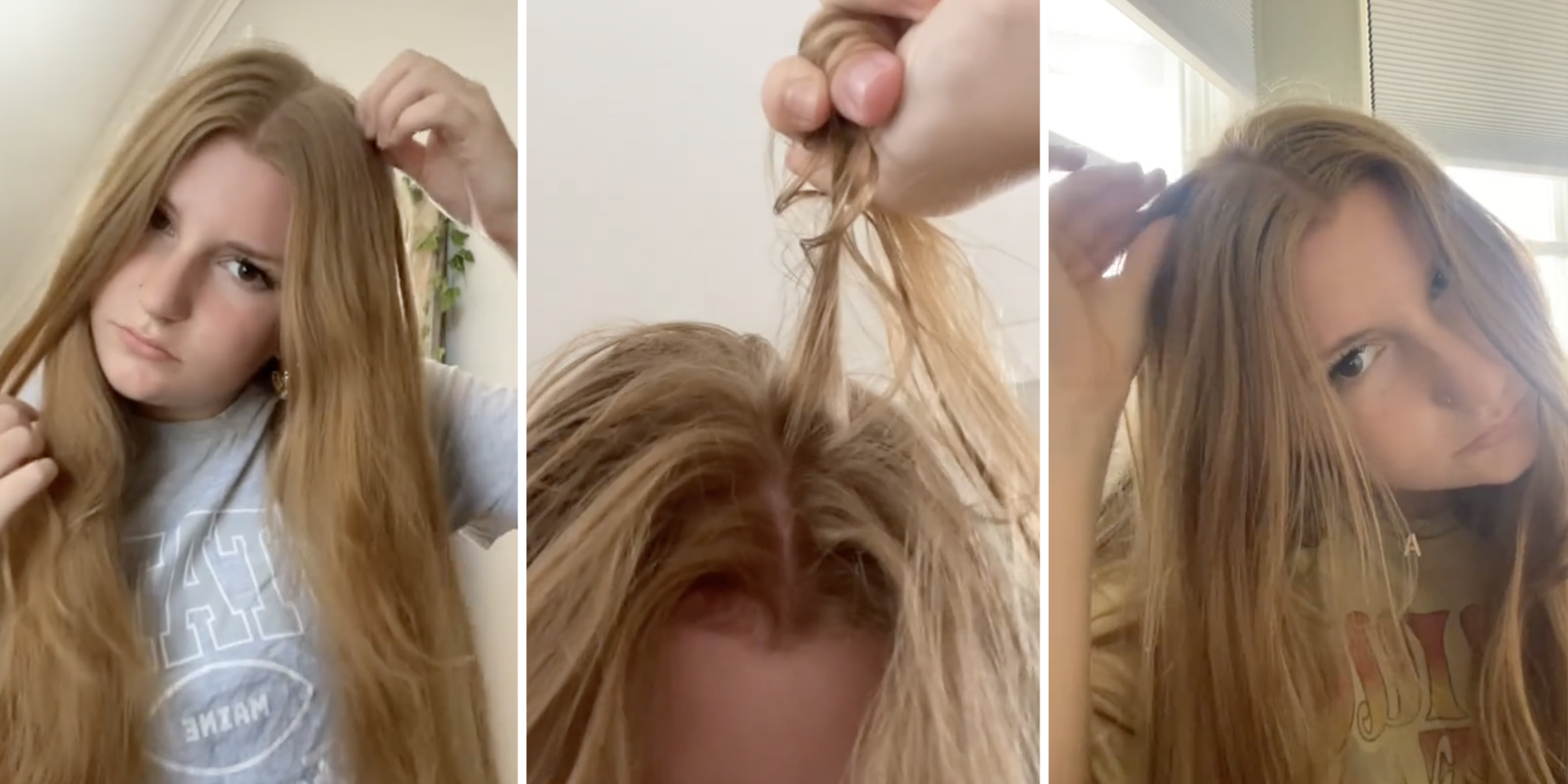
Hair cracking, a viral trend that's made the rounds several times over the years, is making a comeback on TikTok. And that's not exactly a good thing.
What is TikTok's hair cracking trend?
Hair cracking, also referred to as scalp popping, first went viral on TikTok back in 2020. It involves taking a small section of hair, twisting it and pulling it taut, and then yanking it, resulting in a popping sound.
"That popping sound you hear is the galea—which is a layer of the scalp—being pulled off of the periosteum, which covers the bone," Dr. Anthony Youn explained in a video responding to the trend.
The precise origins of hair cracking are unclear. Health.com previously noted that people have attributed it to Asian, Turkish, and Mexican cultures as a remedy for headaches. But much of the information available online regarding its history is anecdotal.
Although the claim that it helps with headaches has spread alongside the trend itself, as Youn points out, "There's no scientific proof that shows that scalp popping can help with headaches."
Why are people jumping on this hair cracking trend?
The alleged pain relief is one reason this TikTok trend has continued to spread on TikTok. But it's also gained traction among ASMR enthusiasts, as well as people who simply like trying out viral trends.
But for anyone thinking about jumping on the bandwagon, you might want to reconsider.
Is hair cracking dangerous?
In short: yes.
Hair cracking can cause a number of complications. Bleeding, bald patches, and folliculitis (inflamed hair follicles) are all possible outcomes. As such, experts have repeatedly come forward to warn people not to hop on the trend each time it's gone viral.
"This should never be attempted at home or in a salon as there are a number of dangers associated with this," Dr. Ross Perry told Newsweek back in 2021. "It can [also] cause a subgaleal hematoma which is when a pool of blood forms under the scalp and can be incredibly dangerous."
In 2023, Dr. Betsy Grunch posted a video response of her own, noting, "[Scalp popping] can actually cause alopecia, or hair loss, and can cause inflammation in your scalp. And inflammation can actually make migraines worse. If done incorrectly, you can also tear your skin and cause bald patches on your head."
Are hair cracking videos banned on TikTok?
Hair cracking videos that have been posted over the years can still be found all across TikTok. But if you search for "hair cracking," "scalp popping," or their respective hashtags, you'll be hit with this warning instead:
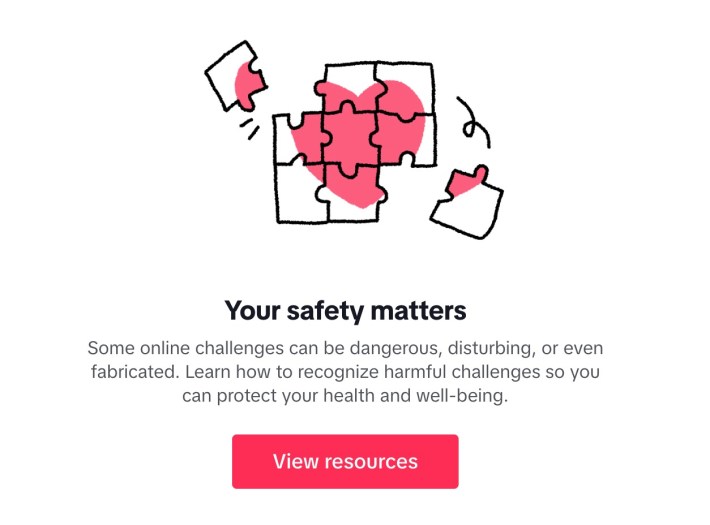
It's unclear exactly when TikTok stopped displaying the results for those searches. But that warning is often deployed when challenges sweep across the platform that encourages potentially harmful behaviors, such as the Benadryl, chroming, or Blackout challenges.
In other words, if the hair cracking trend is dangerous enough that TikTok is actively trying to stop the spread, it's best not to try this one at home.
The internet is chaotic—but we’ll break it down for you in one daily email. Sign up for the Daily Dot’s web_crawlr newsletter here to get the best (and worst) of the internet straight into your inbox.