Discourse around what some are calling the "Gen Z gaze" erupted on X this week as older generations complained about customer service. The "kids these days" grumblings are hardly new to this world, but some tied the lack of greeting from many young cashiers, front desk folks, and similar workers to modern technology and recent traumatic events.
While a few Gen Z users pushed back against the expectation of social niceties, one hospitality worker spoke on how she decided that the dance is actually good for everyone.
The customer service greeting ritual and the "Gen Z gaze"
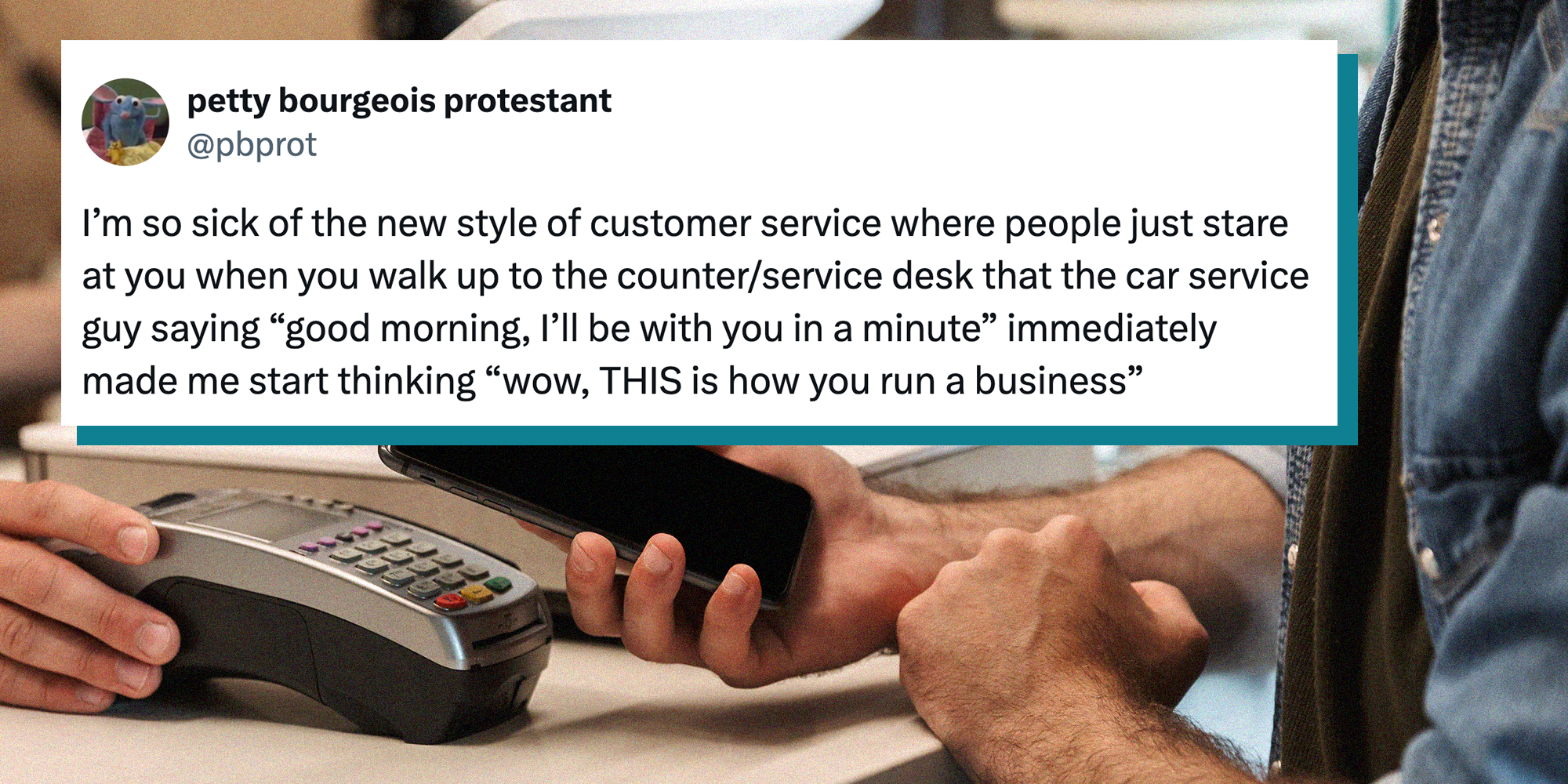
On Tuesday, X user @pbprot complained about this issue in a post that would gain over 1.6 million views and spark a new round of discourse.
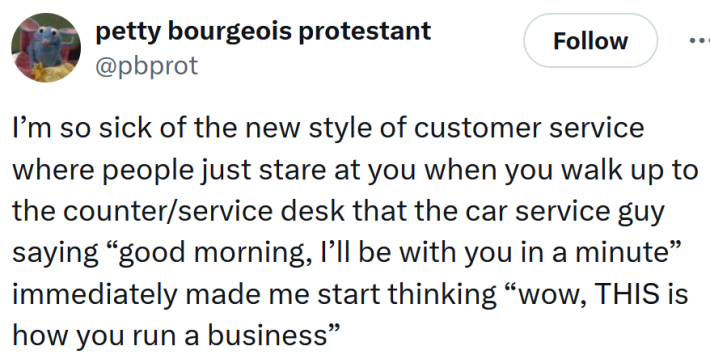
"I’m so sick of the new style of customer service where people just stare at you when you walk up to the counter/service desk that the car service guy saying 'good morning, I’ll be with you in a minute' immediately made me start thinking 'wow, THIS is how you run a business,'" they said.
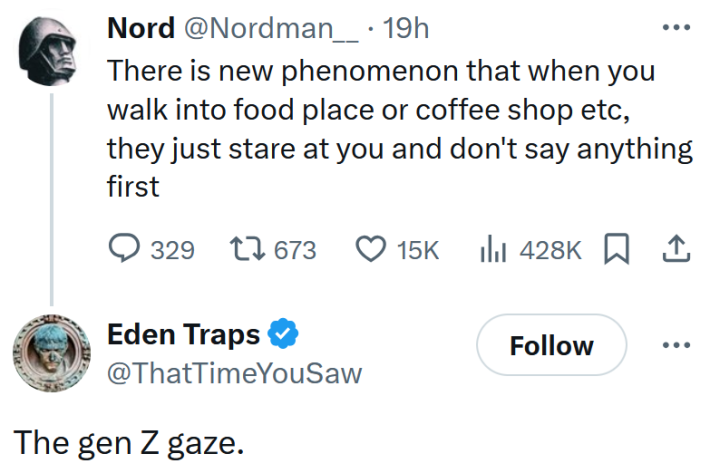
The following day, after @Nordman__ posted a similar complaint, @ThatTimeYouSaw dubbed that silent stare the "gen Z gaze."
While having to initiate the interaction as a customer might not be difficult in many situations, some commenters noted that the silence can cause confusion.
"I go into a restaurant and get The Stare from a hostess (and what really even is their job other than to greet you?)," wrote @MattKnightLewis. "'Table for 2' I say. She turns around and walks away."
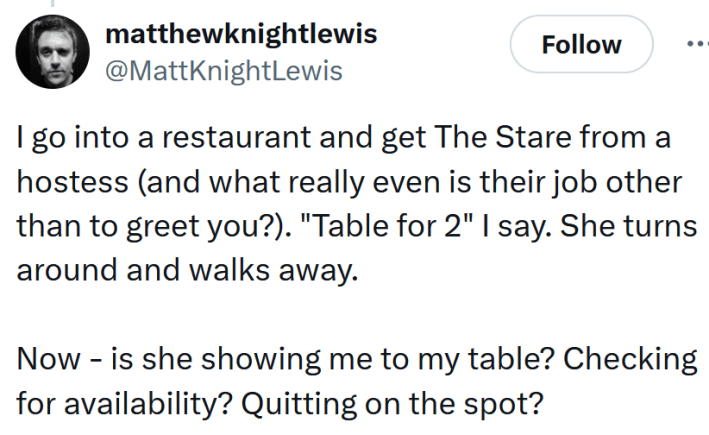
"Now - is she showing me to my table? Checking for availability? Quitting on the spot?"
Of course, many service workers defended themselves by reminding everyone how much their jobs suck.
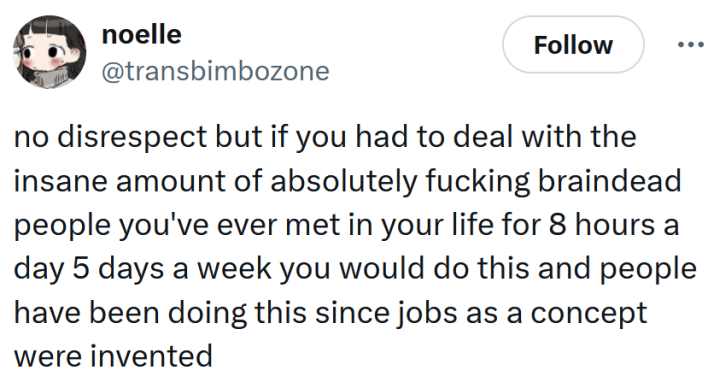
X user @transbimbozone remarked that "no disrespect but if you had to deal with the insane amount of absolutely fucking braindead people you've ever met in your life for 8 hours a day 5 days a week you would do this and people have been doing this since jobs as a concept were invented."
What happened to Generation Z?
Multiple users pointed to the rise of remote work and smartphones as sources of social skill degradation in younger generations. Fewer in-person interactions and less contact with strangers may have left them without the greeting reflex. Commenters of all ages also mentioned that time during the COVID-19 pandemic when customer aggression spiked.
This perception that something's gone wrong with Gen Z likely isn't imaginary. A 2024 survey by online language learning company Preply found that 43 percent of Canadians felt remote work caused a decline in their social skills. Among young respondents, age 16 to 24, this perception reached 52 percent.
Experts also blamed the Gen Z stare phenomenon on the pandemic, which hit right around their entry into the workforce and also impacted some of their schooling experience. In a Forbes report, career and leadership coach Phoebe Gavin theorized that this group "didn't get the opportunity to absorb professional norms the way that they normally would have in in-person internships and early career jobs."
"Because they were working remotely, they weren't receiving much of the passive social training that we receive by simply being in a space with people who reflect the dominant social and communications norms of that space."
Is the greeting ritual worth it?
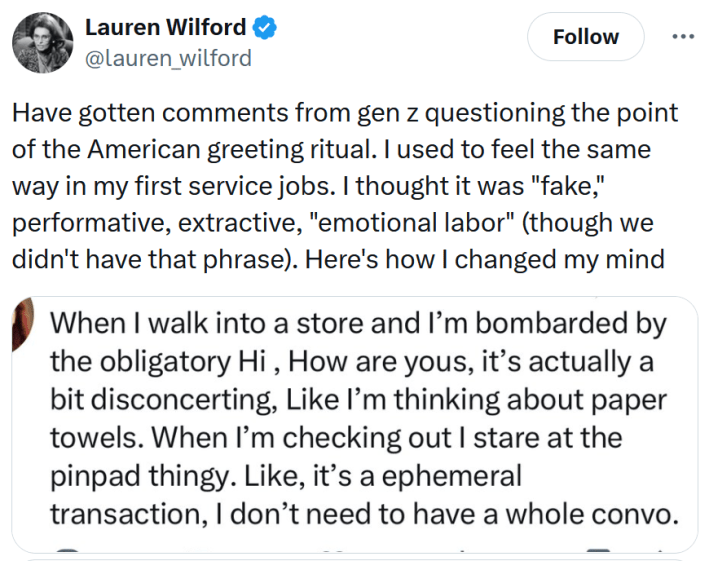
After adding to the discourse, hospitality worker and philosophy enjoyer @lauren_wilford penned a thread on how she changed her mind about forcing a smile with strangers. Like many from Gen Z, Wilford grew up being told to perform greetings and resented it.
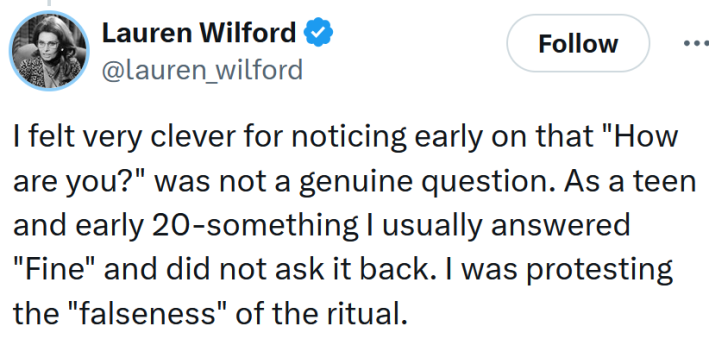
"I felt very clever for noticing early on that 'How are you?' was not a genuine question," she wrote. "As a teen and early 20-something, I usually answered 'Fine' and did not ask it back. I was protesting the 'falseness' of the ritual."
However, as she grew older, she came to the conclusion that there is a real social benefit to the act.
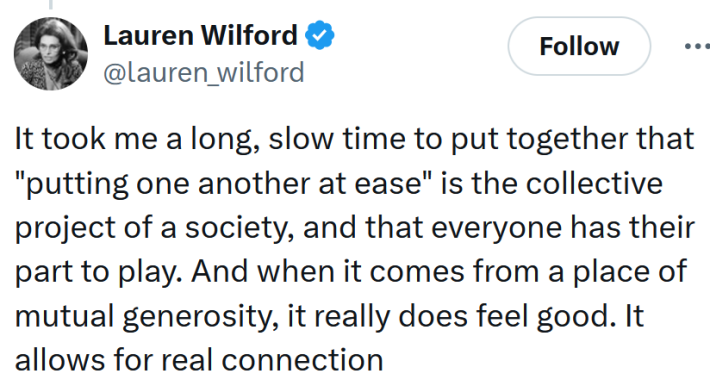
"It took me a long, slow time to put together that 'putting one another at ease' is the collective project of a society, and that everyone has their part to play," she added. "And when it comes from a place of mutual generosity, it really does feel good. It allows for real connection."
Not only that, but smiling and greeting someone warmly often sets the stage for the interaction. The same goes for a cold silence. Many customers will behave better if you're nice to them first.
Putting in the effort to create better interactions with strangers also tends to make you feel better overall.
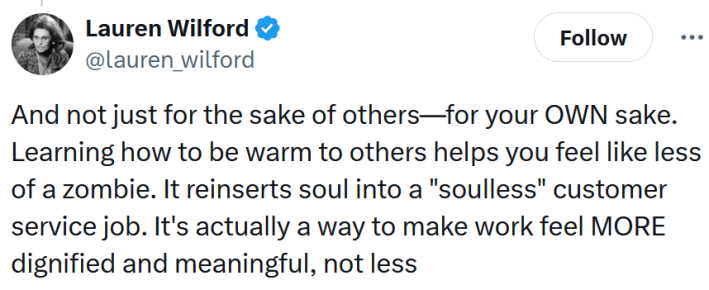
"Learning how to be warm to others helps you feel like less of a zombie. It reinserts soul into a 'soulless' customer service job. It's actually a way to make work feel MORE dignified and meaningful, not less."
The internet is chaotic—but we’ll break it down for you in one daily email. Sign up for the Daily Dot’s web_crawlr newsletter here to get the best (and worst) of the internet straight into your inbox.